Personal
Information
Sheet
Name: Thomas William George Banham
DOB: 26th June 1908
Rank: Warrant Officer II
Service Identity Number: 545435
Service/Regiment/Corp: Royal Artillery
Unit: 12th Coast Regiment
Died: 11th August 1945

Click image to expand and see all images
Thomas William George Banham was born in the parish of Edmonton, Hornsey, Middlesex. He went to Grange Street School in Burton and worked for H.I.Evans (Builders) Ltd before joining the army in 1929.
When war broke out, Thomas was stationed in Hong Kong. His wife and 2 children, a boy (my husband Reg) and a girl, escaped first to the Philippines only to be pursued by the Japanese Army and from there with the help of the Red Cross, to Australia.
As a Battery Sergeant Major (BSM), Thomas was not a junior gunner. BSM was a Warrant Officer Class II appointment: one of the senior soldiers responsible for discipline and administration within a battery. The 12th Coast Regiment manned Hong Kong's fixed coastal artillery defences. So Thomas' war in the Far East began not as an infantryman, but as a senior member of the artillery force defending the colony.
Thomas became a POW at the surrender of Hong Kong on Christmas Day 1941 and was imprisoned at Argyle Street, Shamshuipo, until he boarded the Lisbon Maru for Japan. He survived the sinking of the Lisbon Maru and was taken via Shanghai to Osaka 1b in Japan.
While in Osaka Thomas made a short wave radio transmission with a message to his family. Incredibly this broadcast was recorded and preserved on a disc which our family still has. The audio recording can be heard and the story of the broadcast read by visiting the page Journey of a Radio Broadcast.
From the post-war SCAP investigation, we now know that Osaka 1b did not remain in one physical location through out the war, which in turn means Thomas was probably at several locations too. The main camp at Chikko/Hoincho received approximately 500 British prisoners from Hong Kong on 11th October 1942, which probably included Thomas. This camp was in Osaka's port district and the POWs were principally used as dock labourers and stevedores.
On 1st June 1945, Chikko was destroyed in a B-29 air raid. The prisoners were moved the following day to Tsumori, but because this was considered unsafe they were moved again on 10th July 1945 to Kita-Fukuzaki. The post-war investigators described Kita-Fukuzaki as "three cramped rooms in a warehouse, where the men slept on mats, with a small sick ward and also described the kitchen, latrine and sanitary arrangements as poor."
Sadly, Thomas died in Osaka 1b on 11th August 1945, just days before the Japanese surrendered. His reported cause of death beriberi being entirely plausible given the conditions of the camp and years of undernourishment.
After the war, Thomas' wife and children returned home to Ireland. My husband Reg, Thomas' son, spent a great deal of time researching his family history. I promised my husband before he died that I would write a book about his mother's escape from Hong Kong and his father's death.
It took me more than 10 years to write my book, a novel, which incorporates much of Reg's factual research, turning it into a unusual love story. The book is called The Story of Our Lives. Do Dragons Really Fly. What made writing the book so interesting for me was the fact that I inherited many original artefacts from my husband's research, including a signed letter from King George VI and an original letter written by a Buddhist priest, who looked after the ashes of the POWs, who had died in Osaka.
This letter connects the Banham family directly with a remarkable memorial effort by a Buddhist priest who had cared for the cremated remains of more than a thousand Allied prisoners of war. Thomas' parents had been informed of his death, the date and cause by the authorities, but they had not known what happened to his ashes, immediately after his cremation. In the letter, Rev. Shinkai Yamaguchi, Chief Priest of Juganji Temple, explains how since 1942 he had taken the ashes of the POWs to his temple in Osaka and prayed for the repose of their souls. They had remained on the altar until 20th October 1945 when he handed them over to authorised Army officers of the Allied Forces, but he still continued to commemorate the men every year on that date.
To us as Thomas' family, the letter documents something important, which the normal military databases do not convey particularly well, the intermediate stage between his death and his Commonwealth grave. Thanks to this letter, we now know that Thomas was taken from the POW camp/hospital and cremated, then his ashes were taken to the Juganji Temple in Osaka where they remained until they were taken to Yokohama and finally buied in the Yokohama British Commonwealth War Cemetery. Even then Thomas was not forgotten by the Buddhist priest, he continued to pray for him, wanted to establish a relationship with his and other POWs' families and to permanently enshrine the men at Juganji.


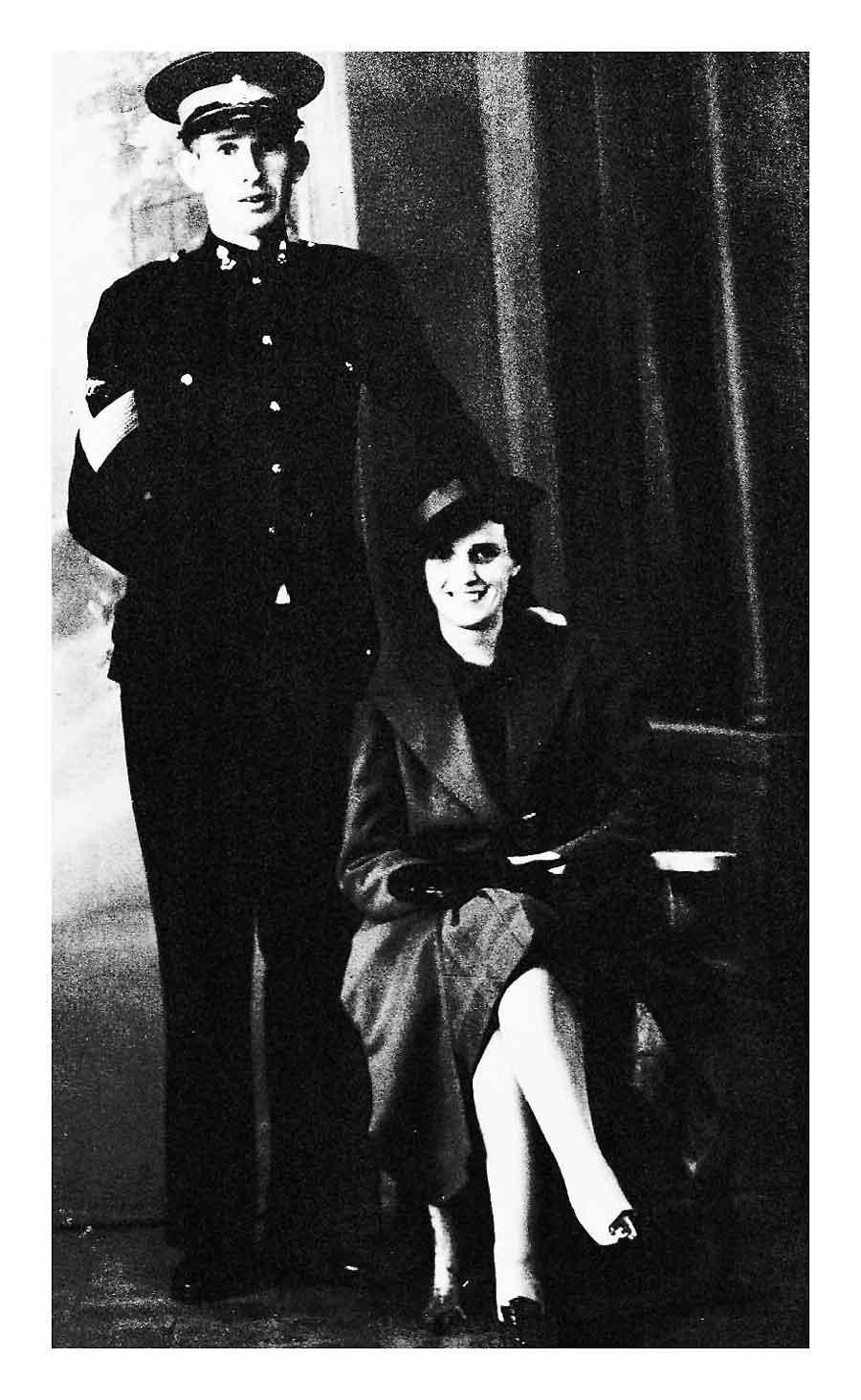


The above information was provided by Irene Turnbull-Banham, daughter-in-law of Thomas William George Banham.
Reproduction of this Personal Information Sheet or the information or pictures contained within it without the express permission of LiMMA is prohibited. Relatives providing information regarding the above person do so on the understanding that it will only be used for the purposes of LiMMA in producing their website and not passed to any third party. For further information please contact limmauk@gmail.com
Return to the LiMMA website for further information on the men's imprisonment in Hong Kong and their experience of the sinking of the Lisbon Maru.