Personal
Information
Sheet
Name: Arthur Jack William Evans
DOB: 6th April 1902
Rank: Seaman Gunner
Service Identity Number:
Service/Regiment/Corp: Hong Kong Royal Naval Volunteer Reserve
Unit:
Died: 8th June 1950
Click image to expand and see all images
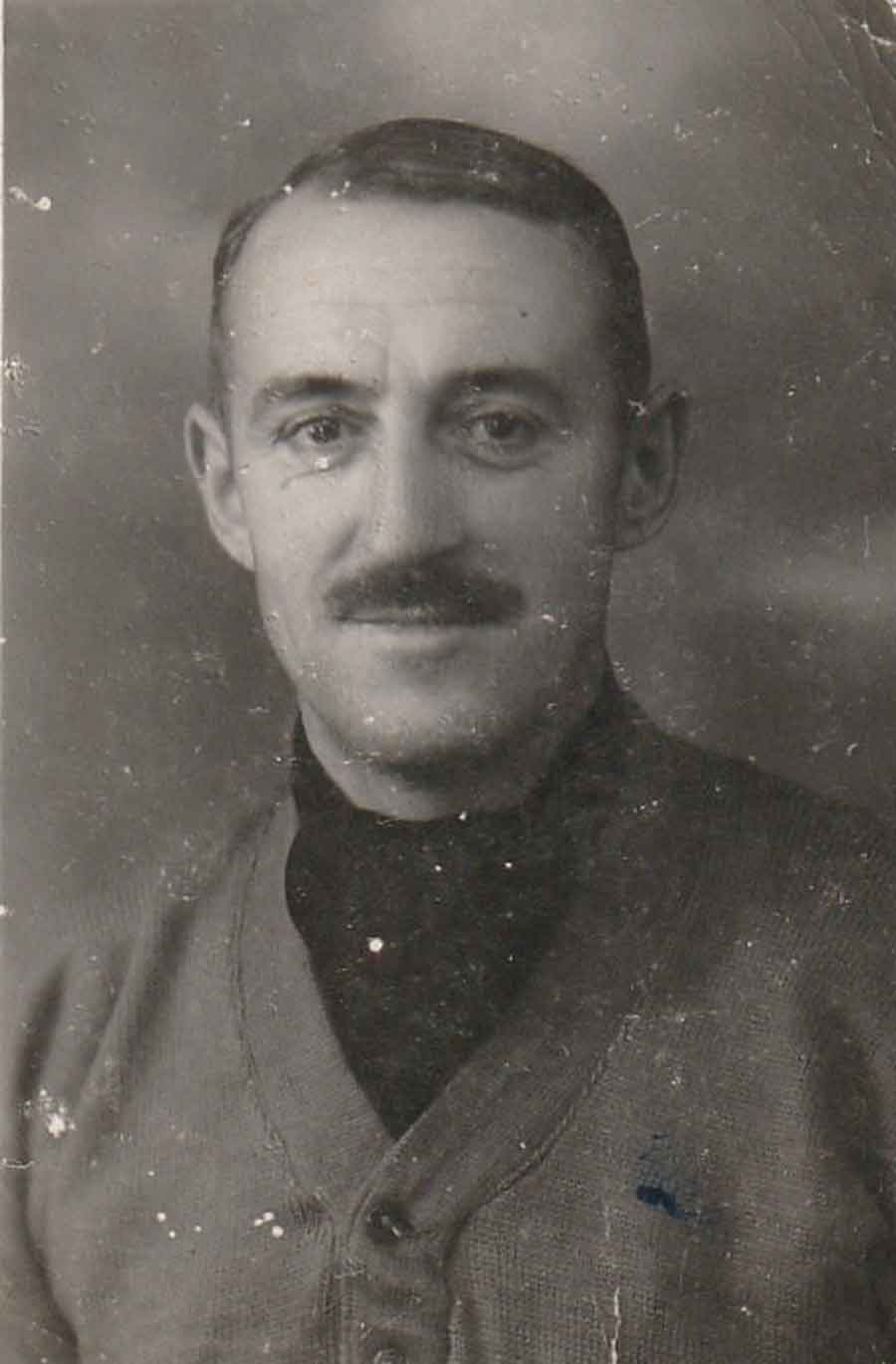
Arthur Jack William Evans, 'Bill' to his friends was born in West Bridgford, south of Nottingham, on 6 April 1902 to Welsh parents Arthur 'Taff' Parsonage Evans and his wife Annie Elizabeth nee Williams, who was more widely known as Nancy. By April 1911, the family had moved back to Wales, living at 43 Plasturton Ave, Cardiff. As well as 'Bill' there were his younger brother Edward Percy Evans aged three, Annie's elder spinster sister Mary Jane Williams, a lodger and a sixteen year old servant named Sarah Lewis.
Tragedy hit the family with the death of Bill's mother from cancer in 1914 aged 40. Bill was aged twelve and his brother Ted aged just seven. The family then lived happily with various members of the Williams family until his father re-married Winifred Lucy Vellacott in 1918.
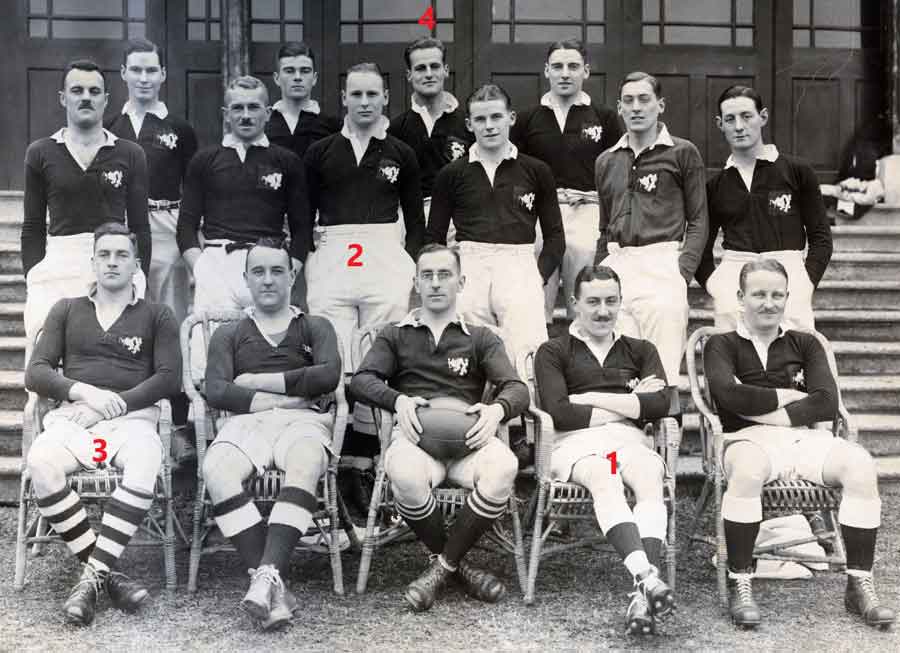
A keen sportsman, by 1917 Bill was attending Bristol Grammar School and was a member of the school's first Rugby XV. After leaving Bristol Grammar School, Bill first joined the staff of the Royal Exchange Assurance Co., before joining the large cigarette conglomerate British American Tobacco (BAT). After his training in Liverpool, Bill travelled to Shanghai in the early 1920s. On his arrival, he quickly entered into the city's social and sporting life.
January 1925, he travelled to Hankow during the Chinese New Year holidays to play rugby. Also on the journey was his friend John Edmund Jupp. More than seventeen years later, in October 1942, Evans and 'Juppo' would embark on an altogether different journey by boat.
After four years of service, Bill returned to England in May 1926. He was back in Shanghai by the end of November 1926 then on to Hankow, a city on the Yangtze River in the heart of China in March 1929.
After a second four years with BAT in April 1930 he departed Yokokama bound for San Francisco then to New York and on to Liverpool, allowing time to visit his family in Bristol before heading back to Japan and then back to Hankow from London in August of that year.
Bill's life changed in Hankow when he went to the theatre to see an amateur dramatic play and took a liking to one of the actresses, Irene. He then wrote 2 letters: one to Irene saying how wonderful she was and how dreadful the other female star was and the other to the other female star saying how wonderful she was and how dreadful Irene was. He then purposefully put the letters each in the wrong envelopes, posted them and waited for results! Irene rose to the bait and they never looked back. After their engagement in June 1932 Bill and Irene were married in Hankow on 5 October 1932.
In November 1939, Bill was told that he was to be posted to Hong Kong and that his wife had been booked on the "Empress of Russia", to the United States leaving Shanghai on 1 December. The "Empress of Russia" was then withdrawn for war work and Irene instead travelled on the "Tatsuta Maru" on 13 December, arriving in San Francisco on New Year's Day 1941. The "Tatsuta Maru" was later used as one of the "Hell Ships" by the Japanese navy to transport the third contingent of prisoners of war from Hong Kong to Japan.
The Japanese invaded Hong Kong on 6 December 1941, curtailing Evans' plans to go on leave and see his wife after one year apart. Despite being a civilian, he did not hesitate to do his bit:
"When hostilities broke out in Hong Kong I was a civilian doing A.R.P. work, but two days before Hong Kong surrendered I got tangled up with the Navy and met Edmund [Jupp] at the Aberdeen Industrial School, where he and the other members of the Mine Watching Branch of the H.K.R.M.V.R., [sic] were stationed as they were fighting on land in the hills around Aberdeen."
After the surrender of Hong Kong on Christmas Day 1941, Edmund and Bill stayed together. They spent the first month in the Japanese POW camp at Shamshuipo. The next three months were spent in North Point with the captured Canadian soldiers. Of his time in the POW camp he recalled that:
"The Japs weren't brutal – they simply didn't care. Once we had only rice for 39 consecutive meals... They gave us nothing, not even medical supplies."
On 18 April 1942, Evans and Jupp were transferred back to Shamshuipo remaining there until 25 September.
About the journey onboard the Lisbon Maru, Bill recalled that:
"We were on board two days before we sailed and on the mornings of the 26th and 27th diphtheria suspects were being sent off the ship back to the camp. Directly we arrived onboard, the dysentery cases and other sick men needed segregation and the only thing to do was to put them on the steel decks, in any space that could be found between the various hatches, etc., and there they laid on their blankets with a tarpaulin to cover them when it rained."
When they finally set sail on 27 September:
"Edmund lay down next to me, we had no beds, simply a straw mat on the steel deck of the hold and we did everything on board, as we did in camp."
They were holed up with 400 men in their hold, one of three which were intended for the transport of cargo rather than humans.
After the US submarine Grouper torpedoed the Lisbon Maru and the Japanese battened down the hatches enclosing the men in the hold. Bill recalled that:
"The men in the hold then got a little excited when they realised what had happened and [Pollock] then got up and addressed everybody and told them to lie quietly. Smoking and talking were forbidden to conserve any fresh air that might be in the hold."
Bill described the conditions in graphic detail:
"... our sole sanitary facilities down in the hold were two or three buckets, I leave it to your imagination to realize what happened when these buckets were filled, as out of the 400 men in our hold there were about 20 with dysentery... We were battened down all night in complete darkness and without any air and I can assure you that the conditions were absolutely unbelievable and during the night Edmund left my side... to try to find one of the buckets."
Bill continued to describe the dramatic moments later that morning:
"the ship gave a terrific lurch to port and it was then the men managed by sheer brute force to force open the wooden hatch boards and get out onto deck. I managed to get myself, say about 3 or 4 minutes after the first people were out, ... as we arrived on deck the ship from the bridge to the stern was completely submerged and the bows were sticking right out of the water... I made my way to the bows of the ship, as did many hundreds of others, and it was when I had been on deck for a few minutes I thought of Juppo – as I used to call him – and shouted for him."
There was no response. Bill stayed on board the ship for the next 45 minutes before it finally sank, and had a clear view of what happened next:
"By the time the first naval contingent had scrambled out onto the deck, it was seen that the military from Nos. 2 and 3 holds were already out of their holds, and hundreds of men were already in the sea swimming in the direction of five or six Japanese auxiliary craft which were cruising slowly between the ship and land which could be faintly seen in the distance. When the naval men got out of the hold some jumped over immediately into the sea, and some of these were shot at by the Japanese, while others crowded together with some of the military men on the bows of the ship."
By this time, the sea was covered in bodies, wreckage and men desperately trying to stay afloat. As the tide started to bring this detritus closer to land, seeing that a maritime disaster had occurred Chinese fisherman set out to try to rescue survivors. Evans was one of the fortunate men picked up by the Chinese fishermen. Realising that many men had escaped, the Japanese made haste to try to recapture as many men as possible. They landed ashore and started violent and intimidating house to house searches rounding up nearly all the prisoners.
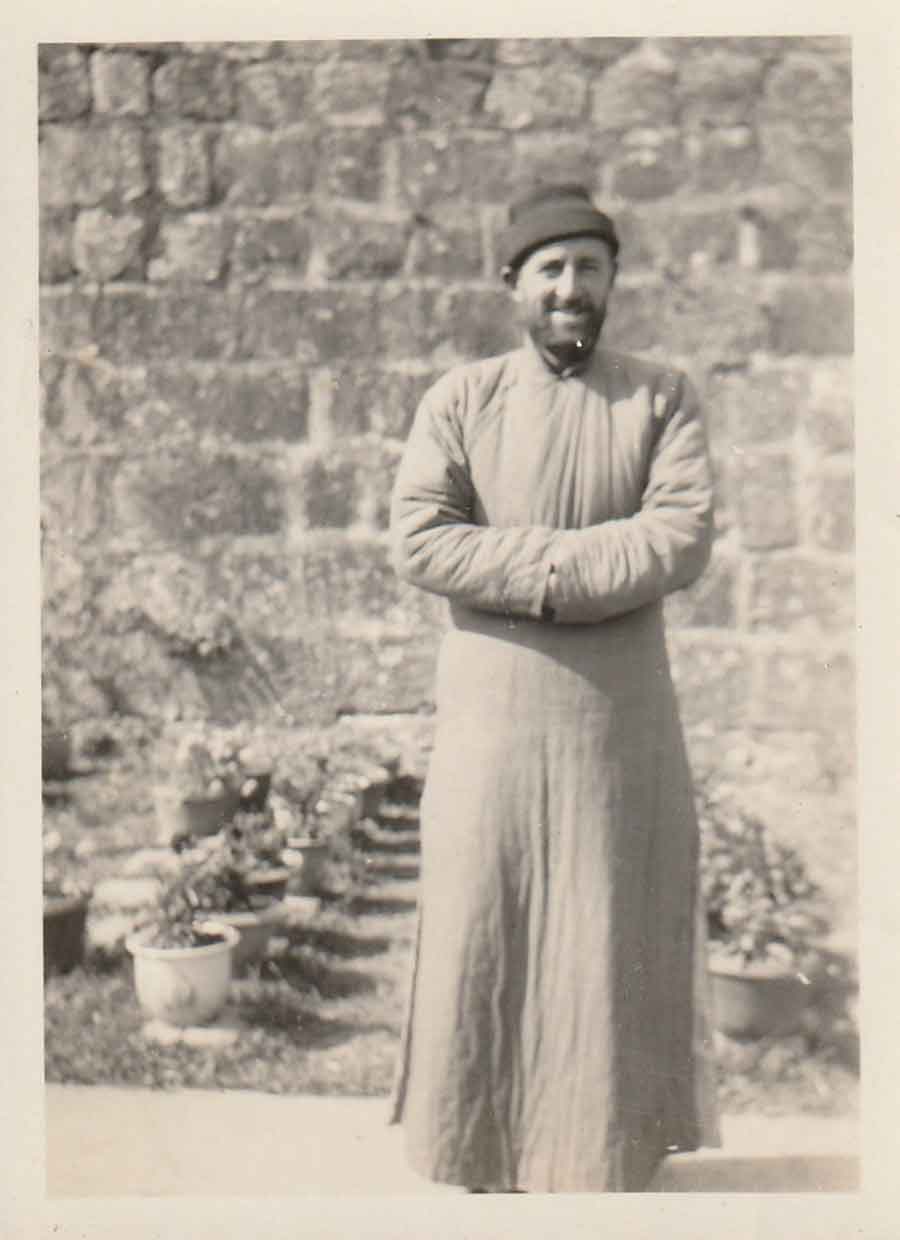
In the end only three men remained free. Evans, William. C. Johnstone and James C. Fallace. They were concealed on Qingbang island in a sea cave called 'Child Cave'.
On 8 October, the escapees were taken by sampan to another island, and after a short midnight meal left on a larger junk headed for the island of Wooloo [Hulu] arriving there early in the morning. While there, Bill wrote a hastily compiled note to two senior BAT officials in Shanghai urgently requesting money.
Escorted by Chinese guerrillas, they made their way overland to a Chinese junk and after a four or five hour journey at sea, narrowly escaping a Japanese destroyer, across land to the guerrillas' main camp of Kuochu in the evening of 9 October. There they rested for three days, able to have a hot bath, their first in 10 months, clean clothes and food. After a short recuperation, now wearing Chinese clothes, they set off again, guarded by the guerrillas eventually arriving at a small town named Changste, under the control of the Chinese National Army. By 16 October, two weeks after they had been torpedoed, they arrived by chair transport at Lian Wang and were able to send a cable to the British Embassy making them aware of their escape and requesting funds and instructions for their trip to China's war time capital in Chungking [Chongqing].
The capital was still an arduous journey away but they were travelling in free China along a route that many before them had followed to freedom. The path took the men to China Inland Missions run by foreign missionaries who were able to attend to their various medical needs, and through numerous towns and cities under the care of courageous Chinese civilians.
They arrived at the large city of Kunming on 16 December. It was here that they were interrogated by American Bomber Command Officers and other intelligence officers who were keen to find out as much as possible about their journey. At this point Fallace and Johnstone headed to India while Evans, under instructions, was ordered to fly into Chungking arriving there on 22 December, 81 days after being rescued.
From Calcutta, Bill travelled by train to New Delhi then to Cairo by air, on to Lagos, across the Atlantic to Trinidad and Bermuda and from there, on 11 March he flew to Baltimore with British Overseas Airways Corporation arriving on 12 March 1943 then on to Vancouver Island, Canada from where he sent a cable on 1 May 1943 to Edmund's father J.A. Jupp.
Increasingly frustrated by the lack of news and conflicting information that the relatives of men on the Lisbon Maru were getting from the authorities, Bill wrote to the Colonial Office, Casualties Department seeking some official line on what was now known:
"I should appreciate it very much if you would furnish me with the correct and latest information on the subject of the missing or survivors of the Lisbon Maru. I should also like to suggest that it would ease the worries of many, if a public statement was made in the Press or Radio as to exactly what information the Government has received, for as things now stand relatives are completely mystified as to the actual fate of their dear ones."
After the War, Bill recuperated in Canada and then travelled back to the Far East after first visiting England in November 1945. When he returned to Hong Kong, he was a prosecution witness in the trial of the 'Military Court for the Trial of War Criminals No. 5' of Kyoda Shigeru, the civilian master of the Lisbon Maru. Shigeru was accused of committing a war crime by closing the hatches of the holds of the vessel when it was sinking. For his part, Bill described the situation from the viewpoint of the naval personnel in hold number one. The trial ran from 23 October 1946 until 29 November, the accused was found guilty and imprisoned for 7 years.
After the trial, Bill and Irene returned to somewhere in China from where they left on 24 May 1949, arriving in New York 19 days later. On 10 August, they travelled from New York to Scarborough, to visit Bill's younger brother Ted.
Returning from their holiday, in January 1950, Bill, now 47, and his wife, embarked on a new adventure with BAT in South East Asia where Bill's travels continued around the islands of Indonesia.
On 8th June 1950 tragedy struck. While travelling in Saigon with his brother in law Maurice Lebas, who also worked for BAT, they were driving from the factory in Cholon, on the southern outskirts of Saigon [Ho Chi Minh] on the Rue Legrand de la Liraze. A witness reported that Mr Lebas and his guest Mr. Evans and all the staff of the Directorate left around 18.00 pm. As they drove away, they were stopped by a group of four Vietnamese Communist terrorists disguised as policemen. With no chance to react, the terrorists opened fire with automatic pistols. Bill was shot through the head and died instantly. Twelve days later, it was reported that the Police had arrested and charged four Vietnamese with Bill' murder.
Bill was laid to rest at Greenbank Cemetery, Bristol.
Their longest separation in all of Bill's travels ended on 29 June 1989, when Irene died in Melbourne, 39 years after his violent death, hopeful no doubt of a final reunion.
The above information was extracted from The story of ‘Bill’ Arthur Jack William Evans" provided by Simon Drakeford and reproduced with his permission. All quotes and sources are noted therein. Simon Drakeford is a relative of Edmund Jupp.
Reproduction of this Personal Information Sheet or the information or pictures contained within it without the express permission of LiMMA is prohibited. Relatives providing information regarding the above person do so on the understanding that it will only be used for the purposes of LiMMA in producing their website and not passed to any third party. For further information please contact limmauk@gmail.com